
Track. Improve.

Symptoms your doctor can actually read.

Clinilog records fever, pain, rashes and fatigue multiple times a day — then turns weeks of them into one page a doctor can take in before the consultation is over.

Android · Free · No ads, no analytics, nothing sold.

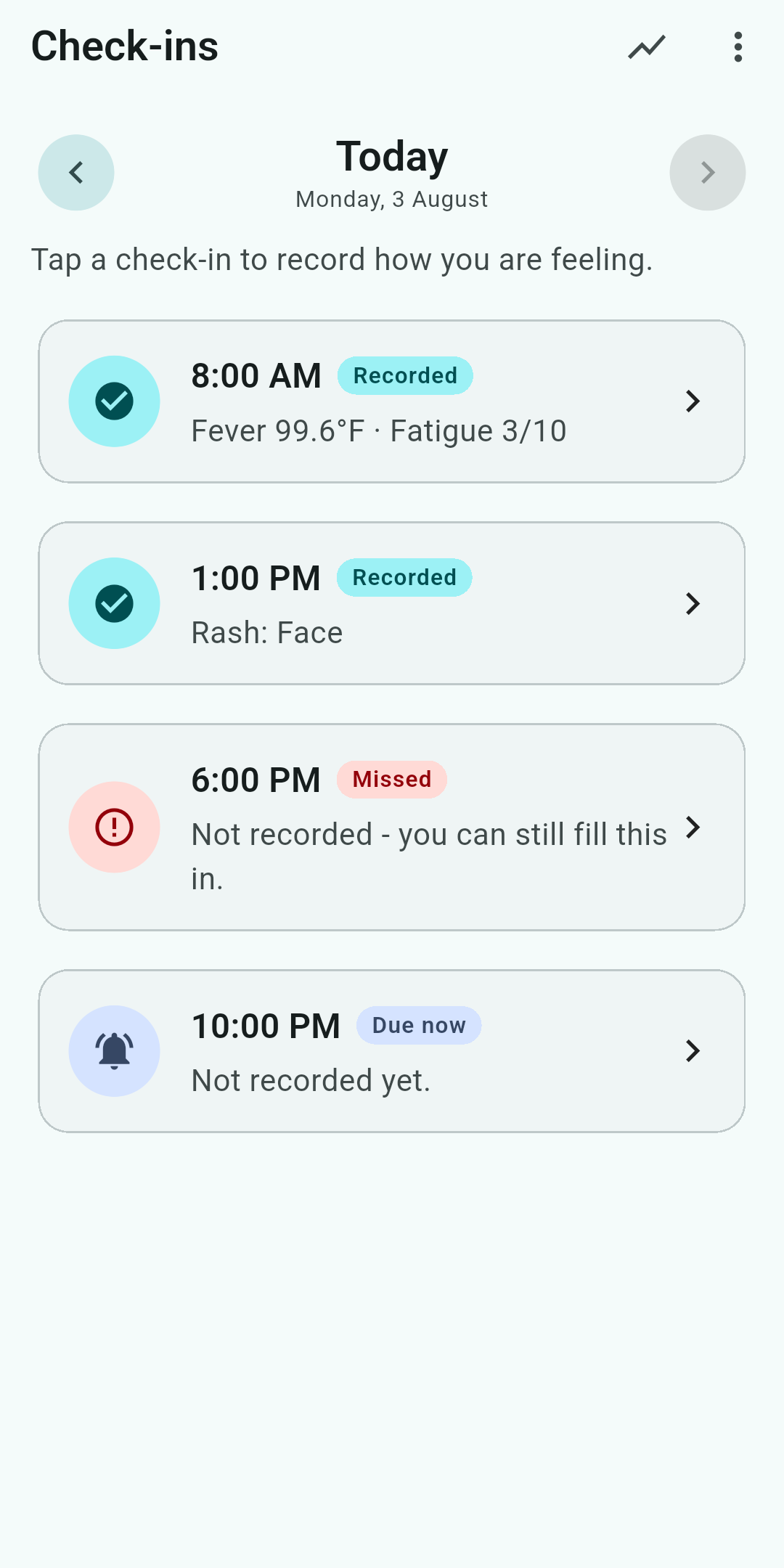
The Clinilog check-ins screen showing the day's check-ins — two recorded, one missed, one due now.

Why it exists

Built for one person, first.

Clinilog started as an app for my mother, who has Lupus. Her doctor adjusts her medication based on how her symptoms move — fever, pain, rashes, fatigue — and every appointment began the same way: trying to reconstruct six weeks from memory in a ten-minute consultation.

Most of the signal is lost that way. A flare that peaked on a Tuesday three weeks ago becomes "it was bad for a while." So the app asks a few short questions, multiple times a day, and does the remembering instead.

Every report leads with how complete it is. If nine check-ins were missed, the doctor sees that before anything else — the data never pretends to be a fuller picture than it is.
Features

Small enough to actually keep up with.

Check-ins multiple times a day, each under a minute. Everything else — the charts, the report, the sharing — is built out of those.

Check in multiple times a day

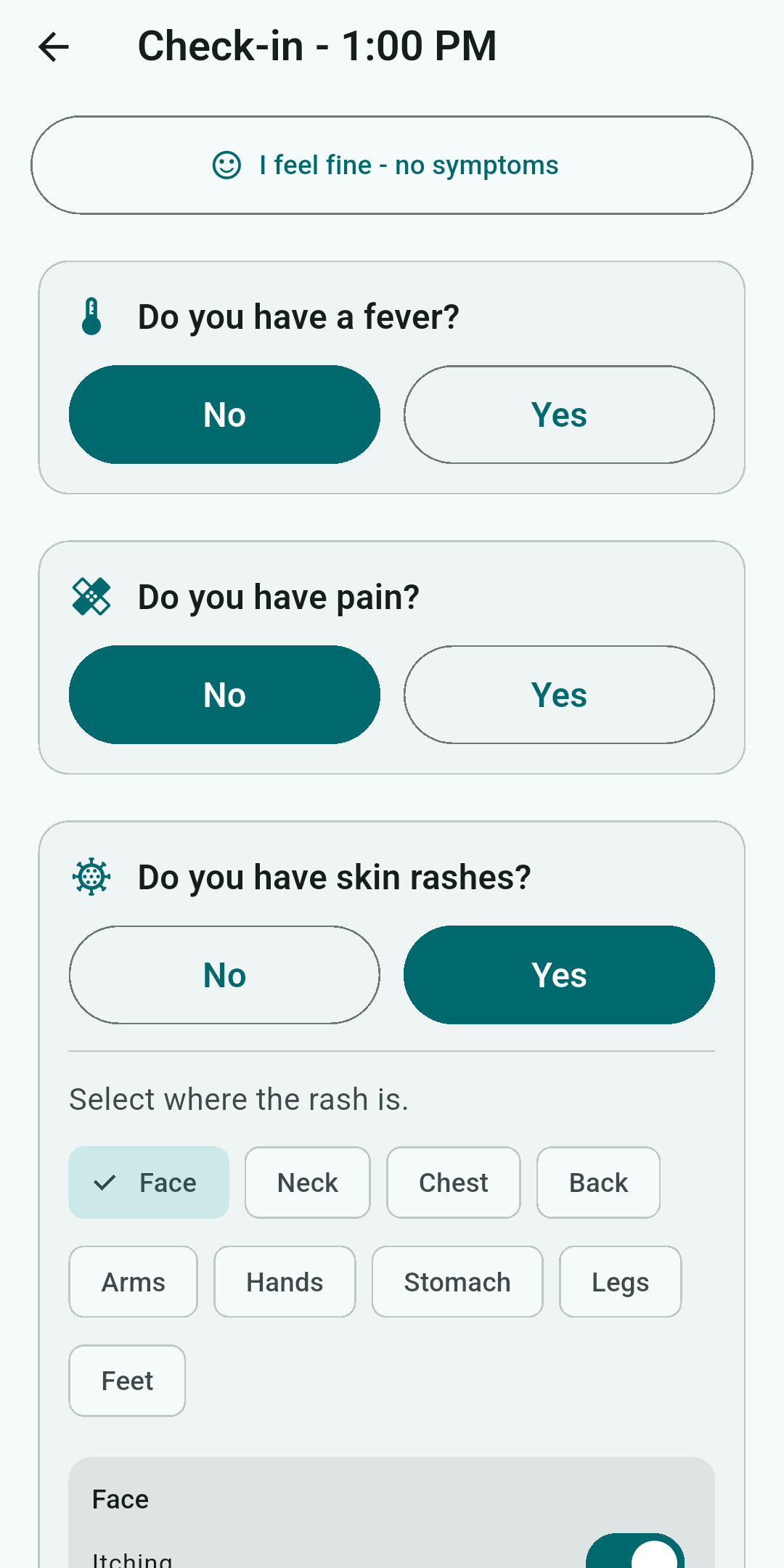
Fever (with temperature), pain (back, shoulder, legs — each rated 1–10), rashes (by body area, itching or hurting), and fatigue. Feeling fine is one tap.

Reminders that don't pile up

Each check-in time fires an exact alarm on the device. When the next one becomes due, the previous notification dismisses itself. The schedule survives a reboot.

Honest about what's missing

A missed check-in is shown as missed, not filled in. Slots from before you installed the app are marked not tracked instead — never counted against you.

Trends over 7, 14 or 30 days

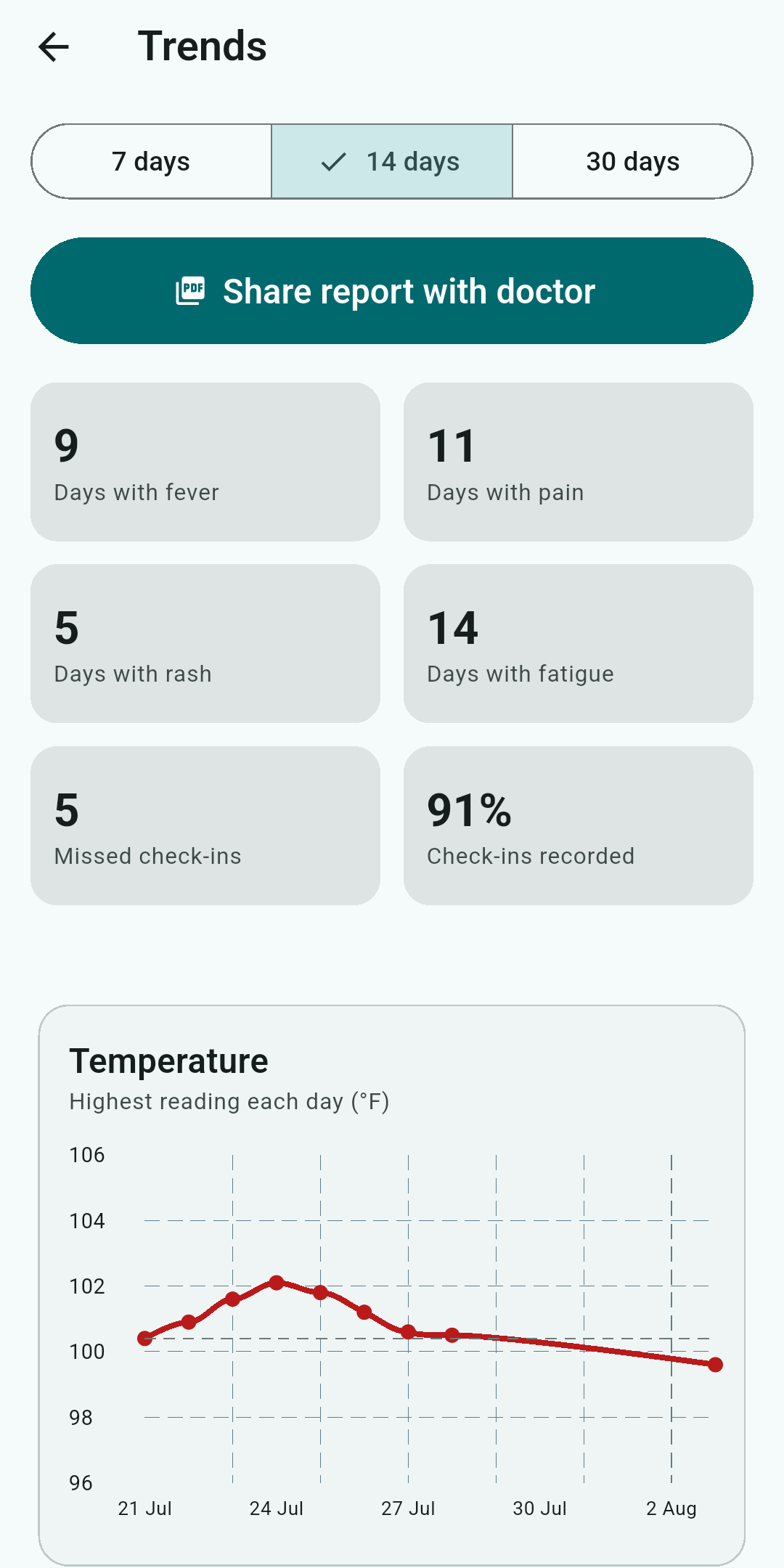
Daily peak temperature, pain and fatigue plotted over time, rash frequency by area, and a full history you can scroll back through.

A PDF for the doctor

One page for any 7, 14 or 30-day window, led by data completeness. Share it over WhatsApp or email, or print it on the way in.

Family can look in, read-only

Invite someone by their Google address and your records appear in their profile switcher. They can never change anything, and removing them cuts access immediately.

Photos when words fall short

Attach a photo to any check-in — a rash, a swollen joint. In the report each one is captioned with the symptoms recorded at the same time.

Fill in yesterday

Step back through earlier days, or tap the date to jump. Recording last night's 10pm check-in at 1am files it under yesterday, where it belongs.

Times you choose

The check-in times are yours to set, and they live on the phone that shows the notification. Your symptom history follows the account.

Screens

The whole app is three screens.

Check-ins screen listing 8:00 AM and 1:00 PM as recorded, 6:00 PM as missed, and 10:00 PM as due now.
Today Every slot for the day, its status at a glance, and a summary of what was recorded.
Trends screen showing days with fever, pain, rash and fatigue, the percentage of check-ins recorded, and a temperature chart.
Trends Counts, completeness, and charts for temperature, pain, fatigue and rashes.
A check-in form asking about fever, pain and skin rashes, with body areas to select for the rash.
A check-in Yes or no, then only the follow-ups that a yes actually needs.

Privacy

It's a medical history. It's treated like one.

There is no public read path to anything in Clinilog. Every record is locked to the account that owns it, plus anyone that account has explicitly invited — and only for as long as the invitation stands.

Read the full privacy policy →

  • Yours by default Database rules restrict every document to its owner. Sharing is opt-in, read-only, and revocable in one tap.
  • Photos delete themselves Every photo expires 60 days after it's taken and is removed automatically. Expired ones stop being shown before that even runs.
  • Nothing sold, nothing tracked No ads and no third-party analytics. Sign-in is Google's, so Clinilog never handles a password.
  • Viewing isn't participating Someone reading your records doesn't get your reminders on their phone, and can't edit a single entry.

Walk in with the whole picture.

Free on Android. Set your times, answer a few short questions, and hand your doctor one page instead of six weeks of guesswork.